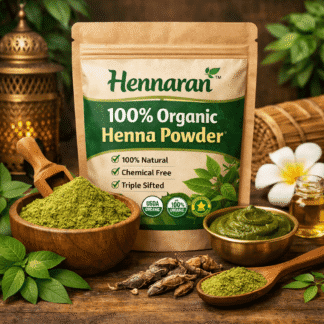
Henna FAQ’s
Frequently Asked Questions
Common questions we answer:
Can henna make hair feel dry or stiff?
Yes, especially for hair that is already dry or protein-sensitive. Henna can feel slightly astringent and may leave hair firmer because it binds to keratin and adds a durable pigment layer.
Balance is simple: moisturize. After you rinse, use conditioner, and consider a light oil or mask the next day. Also, focus applications on roots and new growth when possible; repeated full-length applications can create buildup on the ends.
How often can I apply henna?
Most people do roots every 3–5 weeks, depending on gray growth and desired depth. Full-length applications are usually less frequent—only when you want to refresh tone—because henna is cumulative.
A good “low effort” routine is roots regularly + occasional gloss on lengths. That keeps color even without making ends feel coated or dry.
Can I use henna on chemically dyed or bleached hair?
Often yes, but always strand test. Bleached hair is more porous, so it can grab henna quickly and look brighter, warmer, or more intense than expected.
Also consider what was used previously: if earlier dyes contained metallic salts (common in some “compound henna” products), chemical reactions can occur later. If you’re uncertain, treat your first application as an experiment—small strand, observe for a few days, then decide.
Can henna lighten hair or make hair blonde?
No. Henna contains no bleach and cannot lighten hair. It only adds color and can deepen the look of your current shade.
If you want lighter hair color, your hair requires a separate lightening process (e.g. Bleach), which changes the hair’s structure and carries different risks. Many people choose henna precisely because it avoids that kind of chemical change.
What color will pure henna give?
Pure henna naturally produces copper to orange-red tones. On lighter hair or gray, it can appear vivid and bright; on medium brown hair it often becomes auburn; on very dark hair it shows as warm red highlights in sunlight.
Henna’s beauty is that it layers with your existing pigment rather than replacing it. That’s why two people using the same henna can get different results—your starting color, porosity, and gray percentage are part of the “palette.”
Will henna cover gray hair?
Yes. Henna stains gray hair strongly, but the shade is typically brighter than on pigmented hair—often copper or orange-red at first.
If you prefer brown or black coverage, many traditional systems use a plant-based “two-step”: henna first to create a warm base, then indigo to shift the tone darker. Because gray hair can be more resistant or more porous, a strand test is the most gentle way to preview your exact result.
Can I get brown or black hair with henna?
Not with henna alone. Henna is naturally warm (red/orange), so brown and black shades require another plant dye—most commonly indigo (Indigofera tinctoria).
There are two common methods:
(1) mix henna + indigo for various browns, or
(2) apply henna first, rinse, then apply indigo to reach darker brown or black. This works because henna creates a base stain that indigo can “anchor” onto more reliably.
How much powder do I need per application?
Amount depends on hair length, thickness, and how generous your application is. As a practical starting guide:
Short: 50–100 g • Shoulder: 100–200 g • Mid-back: 200–300 g • Very long/thick: 300–500 g
Henna performs best when the hair is fully coated with henna paste; applying thinly is the main cause of patchy color. When in doubt, mix a little extra; leftover paste can be frozen.
How do I mix henna paste correctly?
Start with clean, product-free hair (heavy oils or silicones can reduce stain uptake). Mix Hennaran henna powder with warm water until it’s as thick as yogurt—smooth, spreadable, and not runny.
Cover the bowl and let the paste rest for dye release. Many methods use a few hours to overnight, depending on temperature and acidity. Then apply generously, section by section, from roots to ends, and keep the paste moist while it processes.
A calm, even application is more important than fancy ingredients: saturation, warmth, and time are what create even color.
Do I need lemon juice or something acidic?
You don’t need lemon juice, but mild acidity can be helpful. Multiple henna educators note that dye release is efficient around pH ~5.5—“slightly sour”—and that strong acids (like undiluted lemon juice) can irritate sensitive scalps.
A gentle approach is to use water, herbal tea, or a mildly acidic mix (or diluted lemon/fruit acids). If you have a sensitive scalp, prioritize comfort: irritation does not improve color. The best “formula” is the one your scalp tolerates and you can apply evenly.
How long should I leave henna on my hair?
Most people get excellent results in 2–4 hours. This window allows lawsone to bind well and gives a rich stain without unnecessary discomfort.
Leaving it longer can deepen tone for some hair types—especially resistant gray—but there’s a point of diminishing returns. If you’re experimenting, do a strand test with 2 hours vs 4 hours and choose the timing that matches your goals.
Should I cover my hair while the paste is on?
Yes—covering is a small step that makes a big difference. A shower cap or plastic wrap keeps the paste warm and moist, reduces drips, and prevents the paste from drying and crumbling.
Warmth helps the dye reaction proceed smoothly, and moisture keeps the paste in contact with the hair. Think of it as creating a gentle “incubation” environment for plant dye to bind evenly.
How do I rinse henna out easily?
Henna paste is plant powder, so patience is your friend. First, soak the hair with plenty of water to soften the paste. Then use a slippery conditioner to help the paste slide out of the hair shaft.
Rinse in sections, gently squeezing from scalp to ends. Avoid aggressive scrubbing (which tangles hair). A final rinse with lots of water is usually enough; many people wait 24–48 hours before shampooing to let color mature.
Should I shampoo right after rinsing?
If you can, wait 24–48 hours. Henna often deepens as it oxidizes over the next day or two, and heavy shampooing immediately can make hair feel drier and may slightly reduce vibrancy.
If you must wash right away (for comfort or lifestyle reasons), choose a gentle cleanser and follow with conditioner. Think “soft care” for the first two days to let the stain settle.
Why does the color look too bright at first?
Fresh henna can look surprisingly bright—often orange—right after rinsing. This is normal. Over 1–3 days, oxygen exposure deepens and mellows the tone into a more natural auburn/copper.
This oxidation phase is one reason many henna guides recommend waiting a couple days before judging the final result. In a quiet way, henna teaches patience: the color ripens like fruit.
Why did my henna turn greenish or muddy?
Pure henna (Lawsonia) does not naturally turn green. Greenish or muddy tones usually point to one of these: (1) an indigo or herbal blend, (2) mineral buildup (hard water, chlorine, metals), or (3) uneven saturation leading to patchy layering.
The remedy is gentle troubleshooting: clarify mineral buildup if needed, do a strand test, and ensure full saturation. If you used a “black henna” product, stop and reassess—some contain additives that behave unpredictably.
Can henna make hair feel dry or stiff?
Yes, especially for hair that is already dry or protein-sensitive. Henna can feel slightly astringent and may leave hair firmer because it binds to keratin and adds a durable pigment layer.
Balance is simple: moisturize. After you rinse, use conditioner, and consider a light oil or mask the next day. Also, focus applications on roots and new growth when possible; repeated full-length applications can create buildup on the ends.
How often can I apply henna?
Most people do roots every 3–5 weeks, depending on gray growth and desired depth. Full-length applications are usually less frequent—only when you want to refresh tone—because henna is cumulative.
A good “low effort” routine is roots regularly + occasional gloss on lengths. That keeps color even without making ends feel coated or dry.
Can I use henna on chemically dyed or bleached hair?
Often yes, but always strand test. Bleached hair is more porous, so it can grab henna quickly and look brighter, warmer, or more intense than expected.
Also consider what was used previously: if earlier dyes contained metallic salts (common in some “compound henna” products), chemical reactions can occur later. If you’re uncertain, treat your first application as an experiment—small strand, observe for a few days, then decide.
Can I bleach or chemically dye hair after using henna?
It’s possible, but it deserves caution. Henna forms a persistent stain and can affect how bleach or oxidative dyes behave, sometimes yielding unexpected warmth or uneven lift.
The biggest risk is not pure henna—it’s unknown additives (especially metallic salts) in low-quality “henna” products. If you ever used those, consult a professional and do multiple strand tests. When in doubt, choose gradual change rather than dramatic lifting.
What is “black henna,” and is it safe?
“Black henna” is often not henna at all. It commonly refers to products that contain paraphenylenediamine (PPD) or other additives used to create a darker, faster stain. The FDA warns that PPD is not permitted in cosmetics intended for skin and is linked to serious allergic reactions.
For hair, PPD is used in some dyes, but it still carries allergy risk and requires patch testing. True henna stains red-orange; if a henna product promises jet-black “henna” in one fast step, treat it as a huge red flag.
Do I need a patch test?
Yes—especially if it’s your first time or you have sensitive skin. Apply a small amount of prepared paste to a small skin area and wait 24–48 hours for any itching, redness, swelling, or blistering.
Even reputable agencies note that patch testing reduces the risk of unpleasant surprises with colorants and hair dyes. For safety, we prefer a calm, careful beginning.
Do I need a strand test?
A strand test is the most practical way to predict your exact shade. Hair is not uniform—ends may be more porous than roots, and previously dyed sections behave differently.
Test a small, hidden section, process it exactly as you plan for the full head, then watch it for 2–3 days as it oxidizes. This gives you a truthful preview and lets you adjust timing, mix, or strategy calmly.
Can children use henna?
Many families use pure henna traditionally, but children’s skin can be more reactive, and accidental contact with eyes is a concern. Always patch test and keep application controlled.
For very young children or anyone with medical vulnerabilities, consult a clinician first. And avoid anything marketed as “black henna,” which is associated with higher allergy risk.
Is henna safe during pregnancy or breastfeeding?
Many people choose pure henna as a lower-chemical option. Still, pregnancy can change skin sensitivity, so patch testing matters more than ever.
If you have complications, a high-risk pregnancy, or any concerns, ask your healthcare provider. Our approach is simple: respect your body’s season, and choose the gentlest path.
Is henna safe for people with G6PD deficiency?
No – and if you have a known G6PD deficiency, please seek legitimate medical guidance before using any dye product.
Can I use henna if I’m undergoing cancer treatment?
Cancer treatments can change the skin barrier, immune response, and sensitivity. Even “natural” products may irritate compromised skin, and infection risk may be higher during certain therapies.
Please ask your oncology team before using henna. Even if they approve, please do an extra-careful patch test and keep everything clean and gentle. Your comfort and safety come first.
Will henna stain my skin, tub, or towels?
Henna can stain skin temporarily (usually fading over days) and can mark porous surfaces or light towels. Prevention is easy: wear gloves, protect counters, and rinse the tub promptly. Soem people lightly coat the edge of their scalp with petroleum jelly to protect it from henna paste.
If you dye regularly, designate an older towel and use a dark towel for the first rinse. Small habits keep the ritual stress-free.
How do I remove henna stains from skin?
Henna fades with time as your skin naturally exfoliates. To speed it up gently, massage with oil (olive, coconut, or baby oil), then use mild soap and soft exfoliation.
Avoid harsh scrubs or chemicals—irritation lasts longer than a stain. Gentle care is the Japanese way: small steps, repeated calmly, are most effective.
How should I store henna powder for freshness?
Lawsone potency declines with heat, light, and humidity. Keep powder sealed, cool, and dark; refrigeration or freezing helps preserve strength.
If you buy in bulk, portion into smaller airtight bags so you only open what you need. This reduces moisture exposure and keeps each batch vivid.
Can I save leftover mixed henna paste?
Yes. Freeze leftover paste immediately in an airtight container or sealed bag. Many henna educators note that freezing preserves dye potential far better than leaving paste at room temperature. citeturn0search6
When ready, thaw fully, remix, and apply. Expect results close to fresh paste, though some people find it slightly less strong—another reason to saturate well.
Why does Hennaran emphasize USDA Organic and traceability?
Henna is an agricultural product. Soil, rainfall, harvest timing, drying conditions, storage, and milling temperature can all influence pigment strength and freshness.
USDA Organic certification helps set a high baseline for how the crop is grown and handled. Traceability goes further: it lets you verify source, batch/lot, and documentation, so quality is not a mystery.
In short: we want your henna experience to feel calm and predictable—because trust is part of beauty. Farm & Organic Certifications page